
Ending the debate between direct instruction and discovery learning
Here's how to think about teaching and learning

Boring War between Cognitivists and Constructivists
In one corner of this educational battle, you will find the Cognitive Psychologists, armed with “how brain learns” and studies on attention, working memory, elaboration, championing explicit/direct instruction. In the other, you will see the Constructivists, waving the flag of inquiry, discovery, and personal meaning, condemning the "sage on the stage" teaching.
This bickering has been going on for decades in the world of education1 in the form of these antagonistic narratives:
Teacher-centered vs Student-centered
Teaching vs Facilitating
Telling vs Inquiring
Knowing vs Doing
Teaching knowledge vs Facilitating skills
Memorizing vs Critical thinking
Passive learning vs Active learning
Content delivery vs Experiential learning
Chalk & Talk vs Cooperative learning
Drill & Kill vs Discovery
Traditional education vs Progressive education
Structure (Control) vs Autonomy (Choice)
Classroom Rules vs Co-constructed Agreements
Sage on the stage vs Guide on the side
Authoritarian vs Transformative
Transmission of knowledge vs Construction of meaning
“Our job is not to teach but to let the students discover”
“Schools kill creativity”
And the list goes on and on.
This constant bickering, mostly between professors and philosophers of both camps, is exhausting and honestly, confusing for a lot of teachers who just want to teach.
Especially, for novice classroom teachers who are trying to figure out the most effective ways to help their students learn meaningfully.
BUT, we must understand this now:
This whole debate is based on a False Choice2.
The answer isn't an "Either/or" or a “This good vs That bad”,
The answer is a "Yes and Yes”.
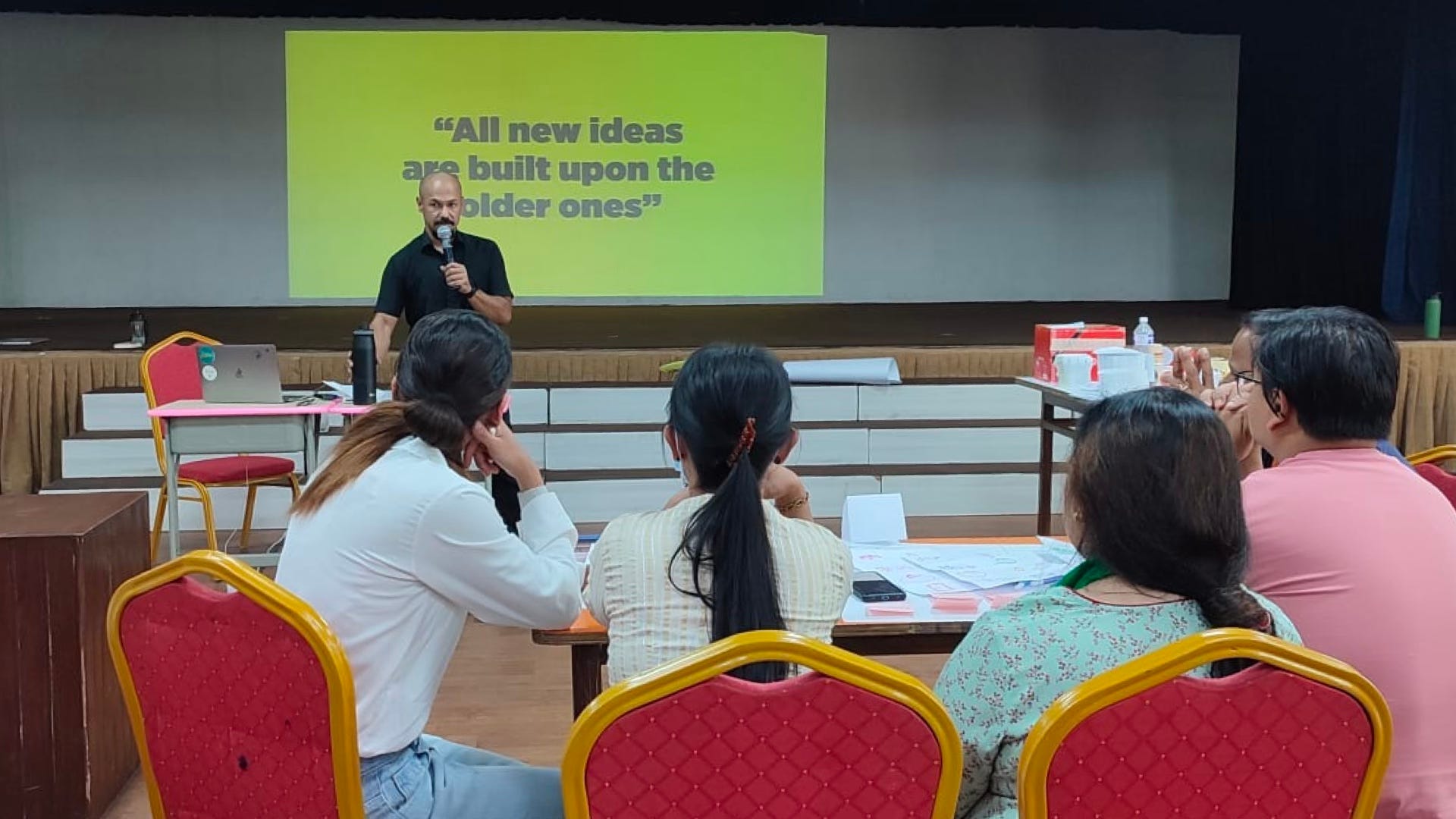
Teaching is Instructive while Learning is Constructive
I came up with this a phrase3 recently that, for me, gives a complete clarity. And it’s so simple that I’m almost embarrassed I didn’t think of it sooner.
This simple idea acknowledges two simultaneous, non-negotiable truths:
1. Teaching is Instructive.
This is our real job. We are the experts, the architects, the designers of learning. We have knowledge and skills to share, and it is our responsibility to do so clearly and efficiently.
This isn’t something teachers need to be timid or defensive about; teaching is our duty. And this means giving explicit instruction, providing clear models, assessing, giving appropriate feedback, and designing learning structures with a clear learning outcome.
2. Learning is constructive.
Of course, this is the undeniable reality. Meaning-making happens inside the student’s head. No amount of brilliant lecturing can transfer knowledge into a mind. Every student must actively build understanding on their own4, connecting new ideas to their prior knowledge - what they already know and believe.
The statement's power is that it separates the process of instruction (the teacher's job) from the process of internalization (the student's job). They are two sides of the same coin, not opposing forces.
My job is to instruct. Their job is to construct. My effectiveness as a teacher relies on how well my instruction enables their construction of understanding.
If you are still confused and cannot put aside your Constructivists ideals, let me explain this with some useful metaphors.

Metaphor 1: The Personal Trainer
This is perhaps the most direct comparison.
The Instructive part: A personal trainer instructs. He/She provides the workout plan, demonstrates the correct form, corrects your posture, adjusts the weights, and tells you how many reps to do. A trainer is expert in designing the workouts for maximum efficiency and safety.
The Constructive part: The client builds muscle, endurance, and skill. No trainer can lift the weight for you. The physiological adaptation, the actual growth, happens inside your body in response to the carefully designed stress.
Imagine, you just joined the gym today. Would you expect your personal trainer to just hand you a barbell and say "figure it out yourself”? Of course not. His/Her instruction is precisely what you need so that you can build strength and endurance effectively and without getting injured.
The same is true in the classroom.
Metaphor 2: The Tour Guide
The Instructive part: Tour guides know the terrain, the history, and the best paths. They point out landmarks you would miss ("Look to your left at the ancient ruins"), provide crucial context, and ensure the group doesn't get lost. They manage the cognitive load of navigating a foreign place.
The Constructive part: The tourists construct their own memories, understandings, and personal connections to the place. The guide can point to the ruins, but only the tourists can form their own awe, connect it to things they already know, and take the photos that matters to them. The guide instructs, and the tourists construct the meaningful experience.
Here’s the reality. The guide doesn't just drop tourists in the middle of a forest and say "explore on your own." That would be insane. In fact, the guide's instruction enables a richer, deeper, and more personal learning experience.
But guides who drop you in the middle of a forest without a map aren’t "constructivists", they’re simply negligent.
Metaphor 3: The IKEA Furniture
The Instructive part: IKEA provides instruction. Clear, step-by-step diagrams (worked examples) that show you exactly how to build the furniture. This is explicit, efficient, and prevents you from making catastrophic errors (like attaching the shelf to the ceiling).
The Constructive part: You still have to construct your furniture though. You will have to turn the 2D instructions into a 3D object in your living room. You will build your tactile understanding of how the pieces fit together. You might even problem-solve if a part is slightly off or personalize it by choosing where to place the furniture. IKEA instructs, but you construct.
No one would argue that IKEA should just deliver you a box of wood and screws without instructions to be more "constructivist." The instructions don't prevent you from learning; they are the very thing that allows you to successfully construct the product.
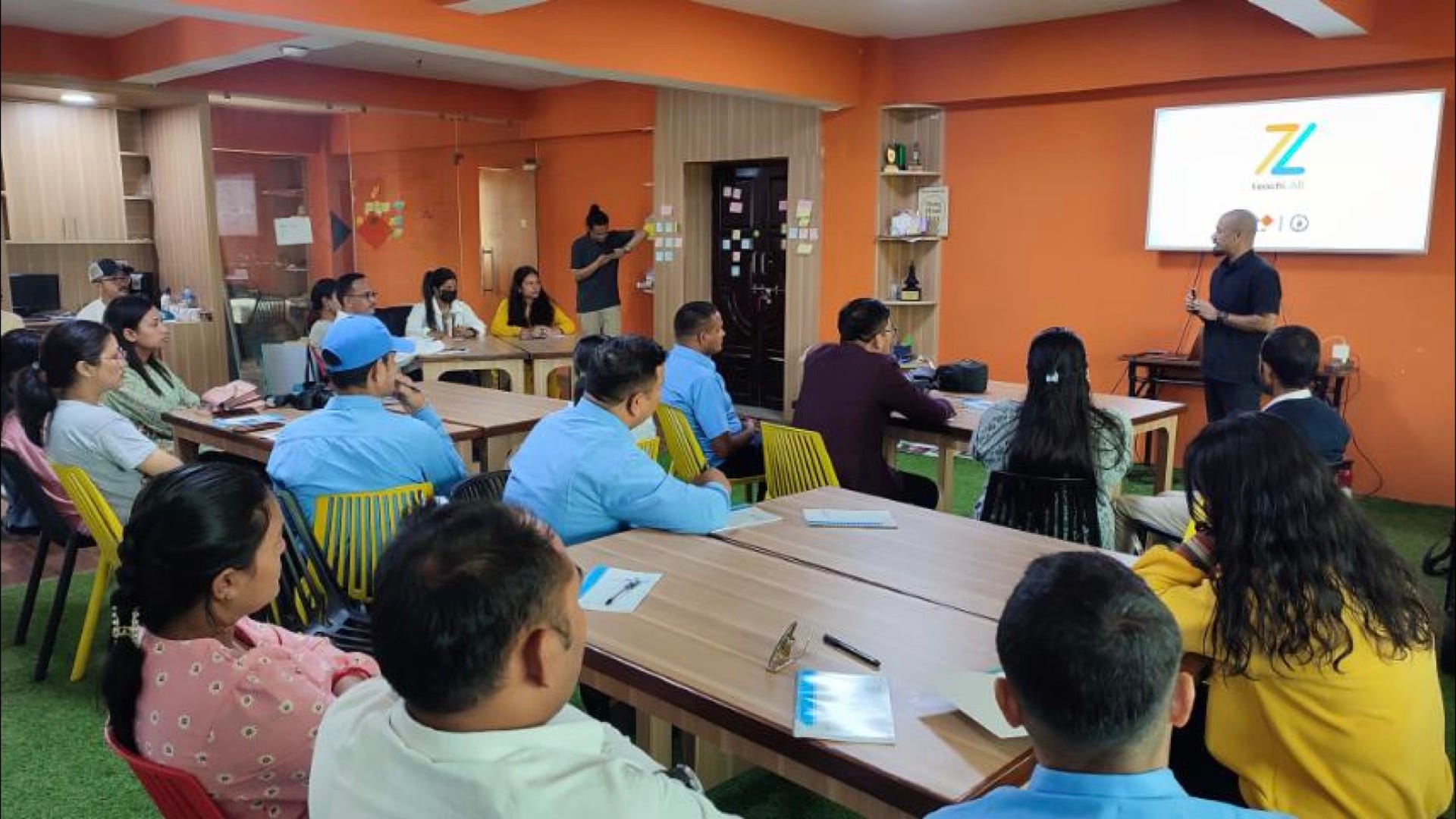
What does this look like in Room 201?
201 is the classroom where I usually teach Managerial Communication course to the MBA students at King’s College, Kathmandu.
This statement “Teaching is Instructive while Learning is Constructive” isn’t just an abstract slogan. It’s a practical blueprint for teaching and learning.
I teach. I gauge their prior knowledge and misconceptions. I give explicit instructions. I demonstrate. I explain established theories. I provide step-by-step methods. I share frameworks. I assess. I give them feedback. I give them questions and cases. I challenge their prior understandings.
I make them think harder. I make them try harder. I make them reflect deeper.
While the students connect their prior knowledge with new information. They acquire knowledge, gain fluency, and build generalizable skills while working through problems. Individually. In pairs. In groups. They construct and reconstruct ideas, make mistakes, get feedback, and slowly build their own mental model of the concepts.
They think harder. They try harder. They reflect deeper.
I understand that epistemology is not pedagogy5. And that I’m more than a "sage on the stage". And more than just a "guide on the side." I’m the architect of the instructional process and their learning journey.
I meticulously design the blueprints (lesson plans).
I ensure the foundation has both depth and durability (background knowledge).
I supply the materials (theories, examples, resources, and models).
Then, the builders (the students) actively construct the building (their knowledge). I’m there to check, provide feedback, and help them solve problems in the process.
Bottomline: My instruction makes their construction possible.
Get over it
Stop fighting over whether your preferred “ism” is better or morally right or wrong.
As teachers, our job isn’t to make our students learn, obviously we can’t. Constructivists are right, but they are only half-right.
Our job is to plan, structure and instruct intently and effectively so that we help our students construct robust, accurate, and deeply meaningful knowledge.
That’s how teaching and learning actually works.
Everything else is noise.
The Debate between Traditional and Progressive Education in the Light of Special Education (https://files.eric.ed.gov/fulltext/ED583181.pdf)
A false choice, also known as a false dilemma or false dichotomy, is a logical fallacy where a complex issue is presented as having only two mutually exclusive options when in reality, more choices exist. This tactic oversimplifies reality, creating a misleading "either/or" scenario to force a choice between limited options, often used to shut down debate and push for a particular agenda.
I admit. This is anything original.
There’s a massive difference between “students construct their own understanding” and “students construct understanding on their own”. The first is not what formal education intends to do.
Constructivism is not a pedagogy (https://learningspy.co.uk/literacy/constructivism-is-not-a-pedagogy/)
Unfortunately my impression is that we teach future teachers how students learn but not how teachers teach
Yes - nailed it!